North Cascades: Big Mountains, Blue Lakes and One Very Cold Swim
A note about this journey: In the summer of 2025, I set out from New Jersey on a solo cross-country road trip toward California—camping, hiking and exploring national parks along the way. North Cascades was my next major national park stop after eight extraordinary days in Glacier. The bar was pretty high. What I found was something different: wilder, quieter and somehow more remote. A few days, two memorable hikes and one extremely cold decision at an alpine lake were enough to make North Cascades one of the highlights of the entire journey.
The road into the mountains
I arrived at North Cascades after an overnight stop in Spokane.
The previous day had mostly been about getting there. After more than 5,000 miles on the road, my car was overdue for service, and by sheer luck a Kia dealer in Missoula had a noon appointment available. That meant abandoning my planned scenic route through Montana and taking the highway instead.
Even that turned out to be beautiful.
By the following morning, I was headed west from Spokane toward Washington's Cascade Range.
Along the way, I stopped at a couple of dams. They weren't exactly highlights of the trip, but they gave me an excuse to stretch my legs and grab a snack. One was the Joseph Dam viewpoint across the Columbia River, and another stop was at Crown Point State Park.
Mostly, though, I remember the sheer pleasure of driving.
Sunroof open, windows down, classic rock playing—Eagles, Fleetwood Mac, Dire Straits. The western landscape unfolded around me.
After thousands of miles, there were days when driving felt like work.
This wasn't one of them.
On roads like these, the drive was the destination.
The deeper I drove into the Cascades, the more dramatic the landscape became. North Cascades Scenic Highway—SR-20—twisted through enormous peaks and valleys. My campsite was near the western side of the park, so I was approaching from the east, following what felt like an endless series of winding mountain roads.
I didn't stop as often as I normally would. I wanted to reach the visitor center before it closed so I could get maps and talk to the rangers about hiking conditions.
By about 4 p.m., I made it.
After Glacier, where a stranger had given me bear spray, I asked the ranger whether I needed it here. As I remember the conversation, he said the bears I was likely to encounter were black bears and generally wanted to avoid people. That brief exchange helped me feel more relaxed, even with all that wild country around me.
I eventually pitched my tent in a wooded campsite. The park already felt wonderfully remote—wild, rugged and defined by massive mountains.
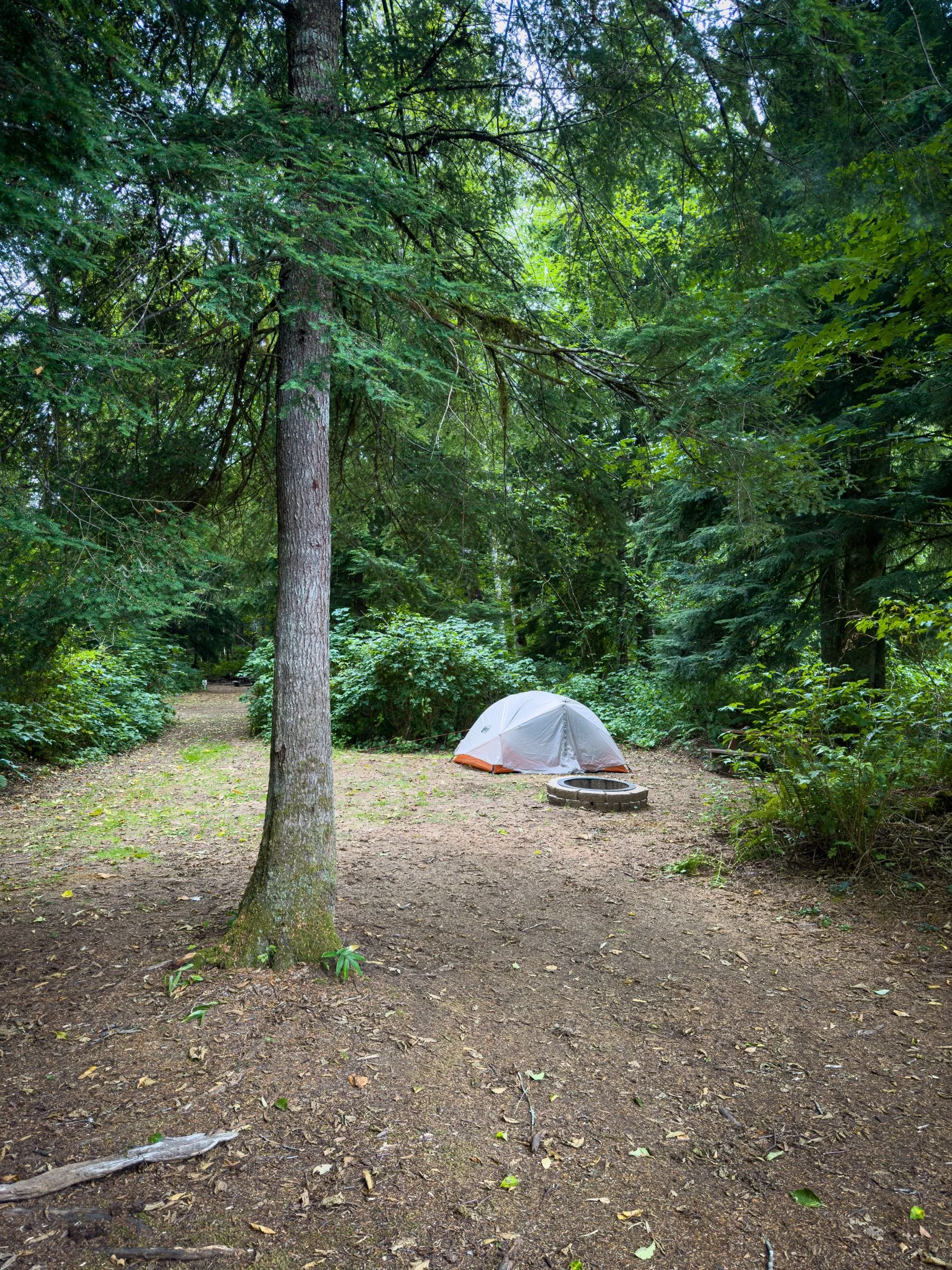
Rain was forecast for the next day.
My rough plan was simple: one iconic hard hike, perhaps another easier one, and then see what the weather allowed.
By this stage of the road trip, I had learned not to become too attached to plans.
Maple Pass: the hike I came for
The next morning I headed for Maple Pass.
The trailhead was more than an hour from my campsite, back toward the eastern side of SR-20. I grabbed coffee and a muffin from a roadside shop and started driving.
Again came those serpentine mountain roads.
By the time I reached the trailhead, the parking lot was full. I found a place along the road, pulled on my gear and started the loop.
Maple Pass is about 7½ miles with roughly 2,200 feet of elevation gain. Other hikers had advised me to go counter-clockwise, which would make the descent somewhat kinder on my knees.
The morning was cool and damp—temperatures in the 60s, cloudy skies and a little drizzle. After the heat I'd experienced earlier in the trip, it felt wonderful.
The trail began inside dense forest.
Then, within a mile or so, everything opened.
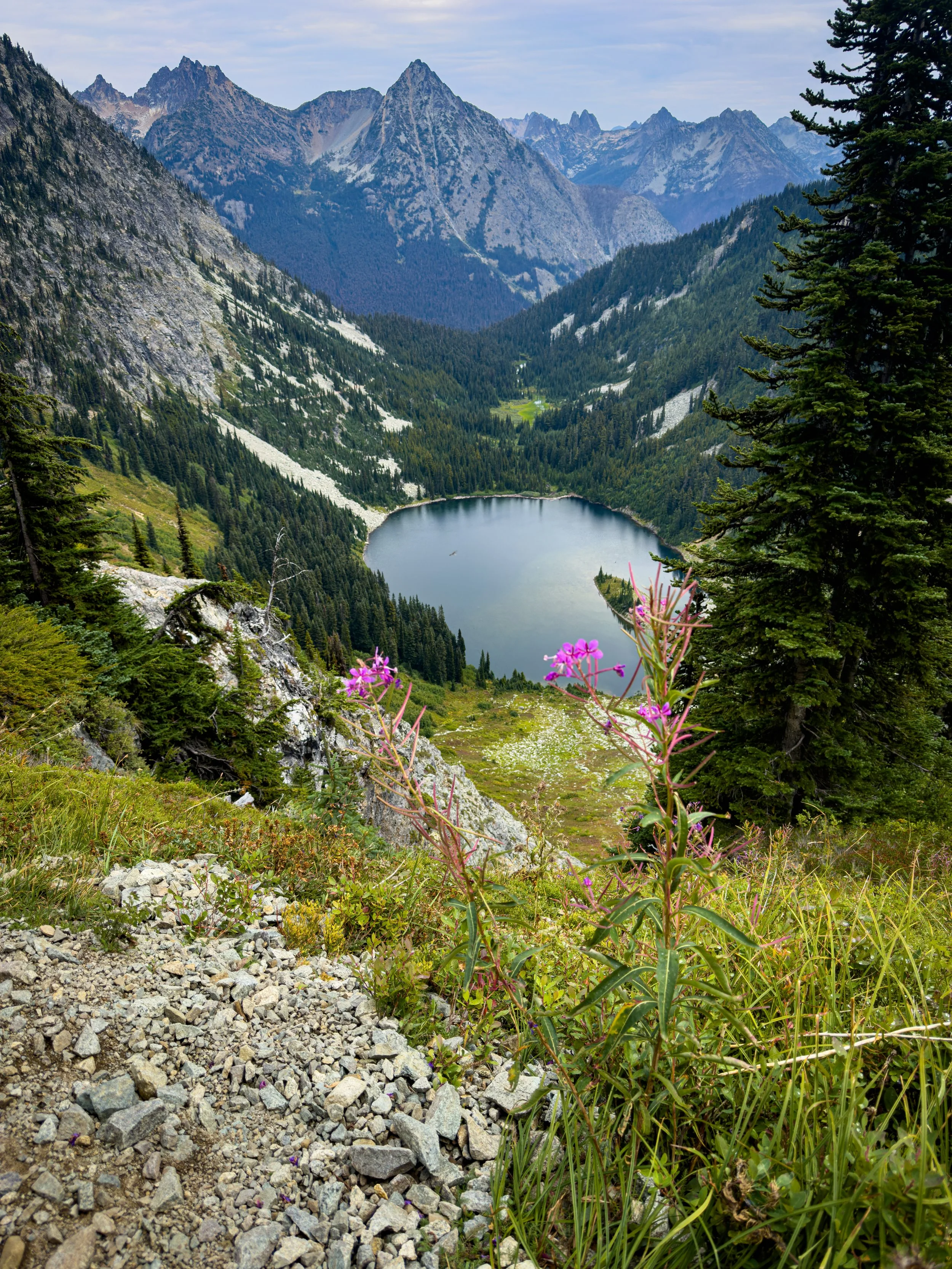
Jagged mountains surrounded the basin. Alpine meadows covered the slopes. Lake Ann appeared below, and as I climbed higher, the trail moved onto an exposed ridge with sweeping views in every direction.
This was the North Cascades I'd come to see.
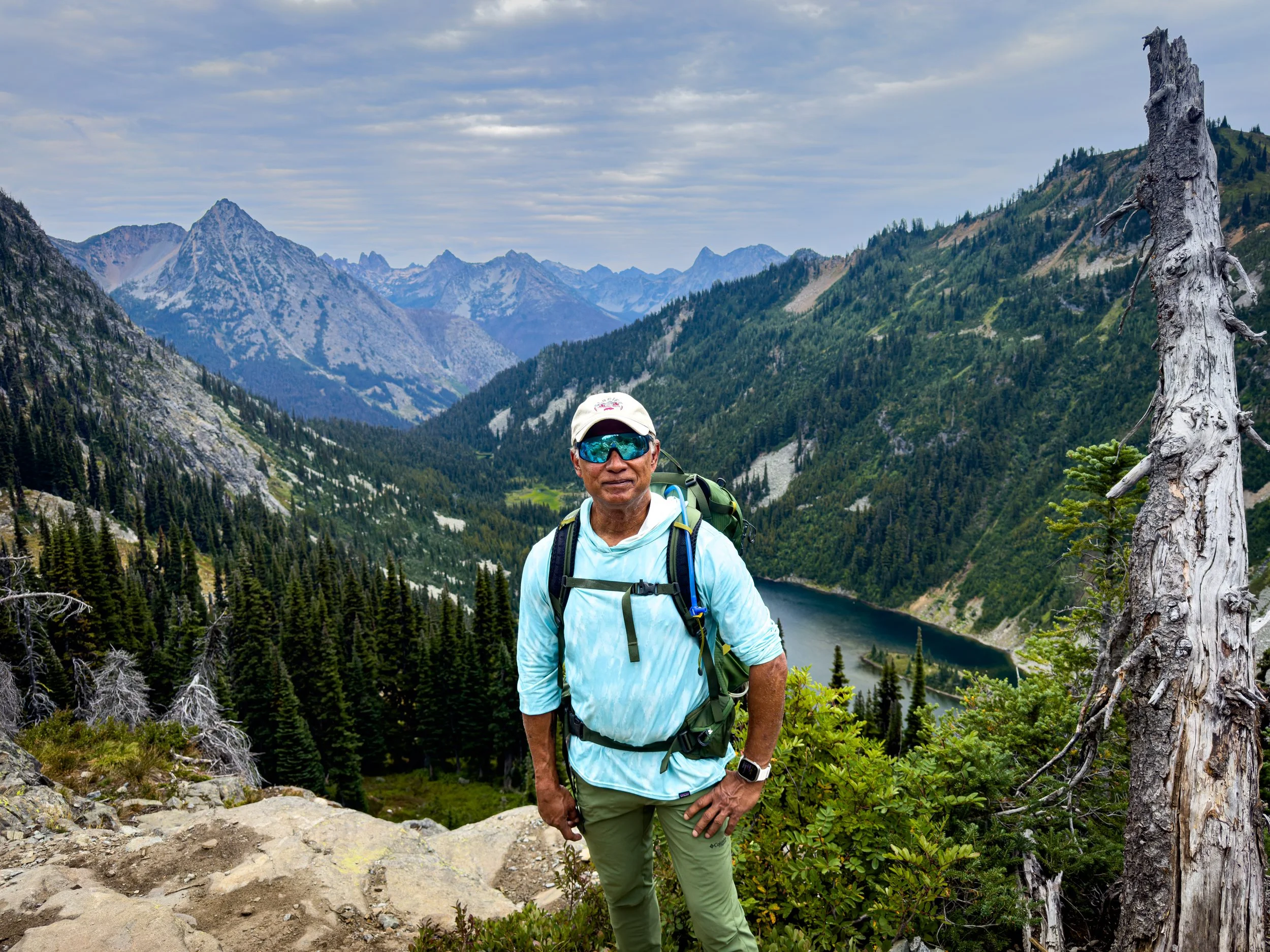
Glacier had been full of extraordinary blue lakes, wildlife and enormous open landscapes. North Cascades felt different. The mountains seemed rougher somehow—more jagged, more densely packed, more rugged.
At the summit I could see snow-covered peaks stretching into the distance. They reminded me of the Alps.
I had been wondering whether anything immediately after Glacier could possibly impress me as much.
Apparently, yes.
A wrong turn—and a little help
Of course, beautiful scenery doesn't prevent me from occasionally doing something stupid.
On the descent, I came to what looked like a V-shaped split in the trail and somehow chose the wrong side.
Very quickly, I realized I wasn't really on a trail anymore.
The slope became steep and muddy. My footing was poor, and even trying to move sideways wasn't helping much. I could see where I needed to get to, but getting there gracefully was becoming less likely by the second.
Earlier in the hike, I'd repeatedly crossed paths with an older couple from Seattle. They seemed to float effortlessly up and down the mountain while the rest of us worked considerably harder.
The gentleman spotted me struggling.
He scrambled over to help.
I tossed him my hiking poles, lowered myself down and eventually resorted to sliding through the mud on my backside until I could reconnect with the actual trail.
Not one of my more elegant hiking moments.
But it was another reminder of something I'd been experiencing throughout this cross-country trip:
Strangers appear at exactly the right time.
At Glacier, someone had handed me his bear spray.
Here, someone helped extract me from my self-created muddy predicament.
Solo travel doesn't always mean doing everything alone.
Turquoise water everywhere
After Maple Pass, I took the short paved trail to Rainy Lake.
It was only about a mile and made a perfect cool-down after the bigger hike. The lake sat beneath cliffs and waterfalls, quiet and serene.
My watch eventually showed about nine miles for the day and around 2,200 feet of climbing.
On the drive back, I stopped at several viewpoints I'd rushed past when arriving.
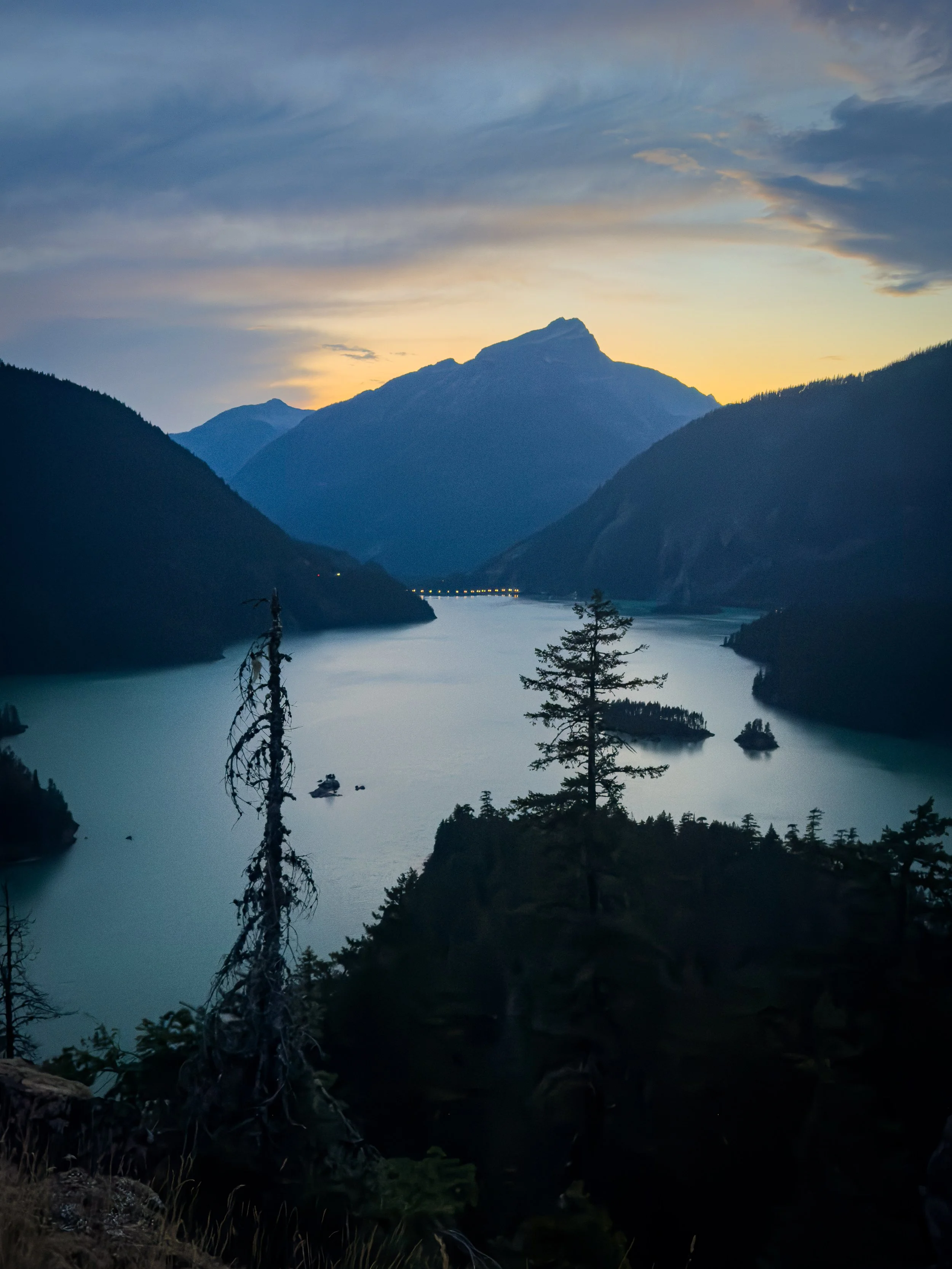
Diablo Lake was the standout.
The water had that almost unbelievable turquoise color I'd become accustomed to seeing in glacial landscapes. Gorge Lake offered another variation on the same theme—deep water framed by steep mountains and thick forest.
By now I'd seen extraordinary lakes in Glacier. I'd seen alpine water in Switzerland and elsewhere around the world.
Yet I kept stopping.
You would think there would be a point when another blue mountain lake becomes just another blue mountain lake.
Apparently, I hadn't reached it yet.
Blue Lake—and a questionable decision
The following day was intentionally easier.
I slept late, grabbed coffee and an egg sandwich, and spent some time at the North Cascades Visitor Center learning more about the park—the rugged topography, changing forest zones and the way weather shapes the ecosystem.
Then I headed for Blue Lake Trail.
Compared with Maple Pass, this was straightforward: about five miles round trip and roughly 1,000 feet of elevation gain.
Most of the trail stayed beneath tree cover. The shade made the steady climb comfortable, and there weren't many dramatic views along the way.
Then the forest opened.
Blue Lake sat below the surrounding peaks, its water astonishingly clear and intensely blue.
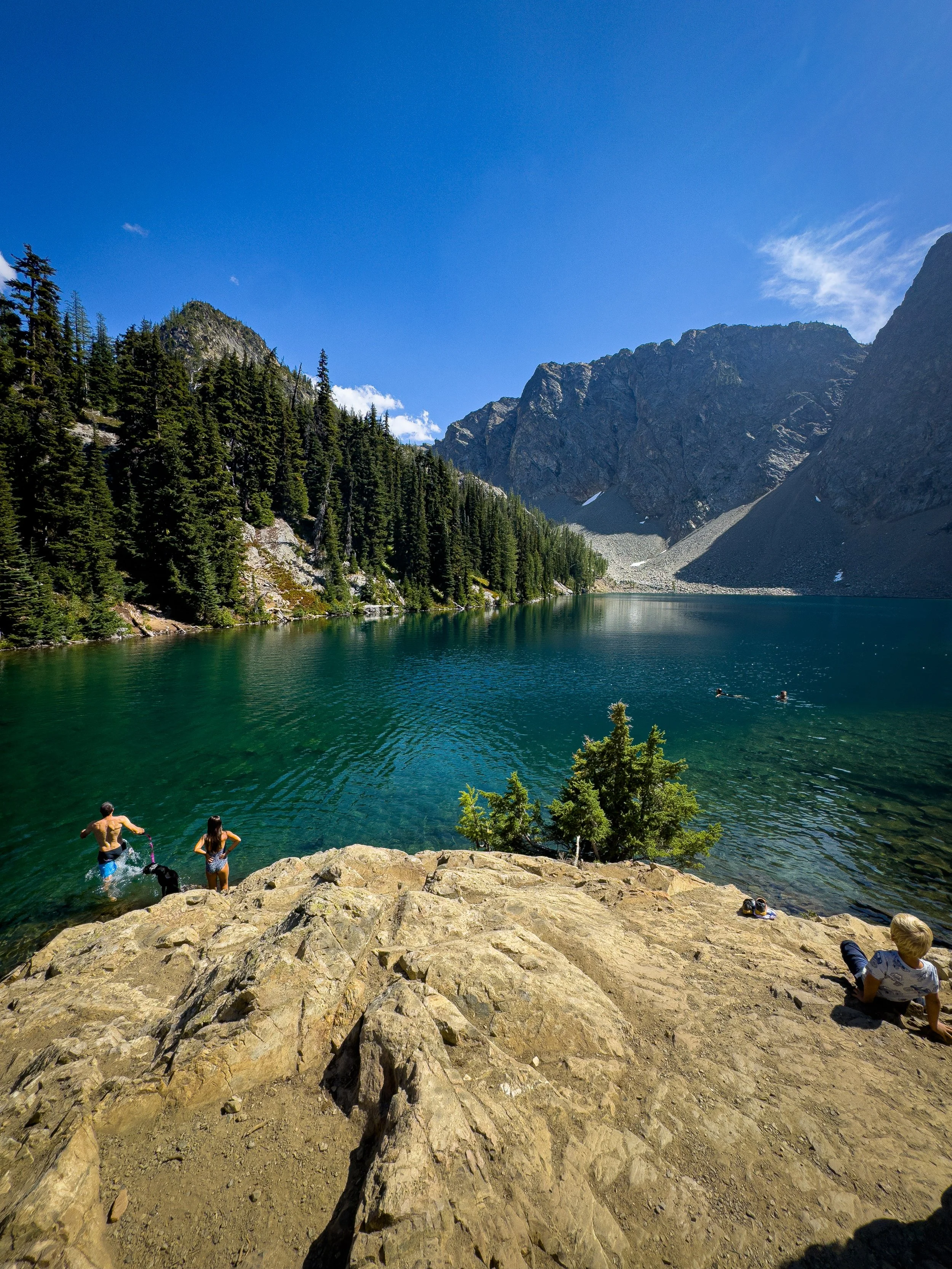
I had packed swim shorts.
This was apparently all the encouragement I needed.
I changed, walked into the lake and dove in.
The water was probably somewhere in the mid-50s.
It was cold.
But the sun was shining, and after days of hiking, the shock of that water felt incredible. I stayed in for perhaps half an hour.
Getting out was another matter.
I stood there shivering, teeth chattering, for a good ten minutes while my body reconsidered the wisdom of what I'd just done.
Would I do it again?
Absolutely.
Small towns along the way
After Blue Lake, I continued east along SR-20.
I passed through Mazama and then Winthrop, an Old West–themed town with wooden sidewalks, saloon-style buildings and a main street that looked as though someone had constructed it for a movie.
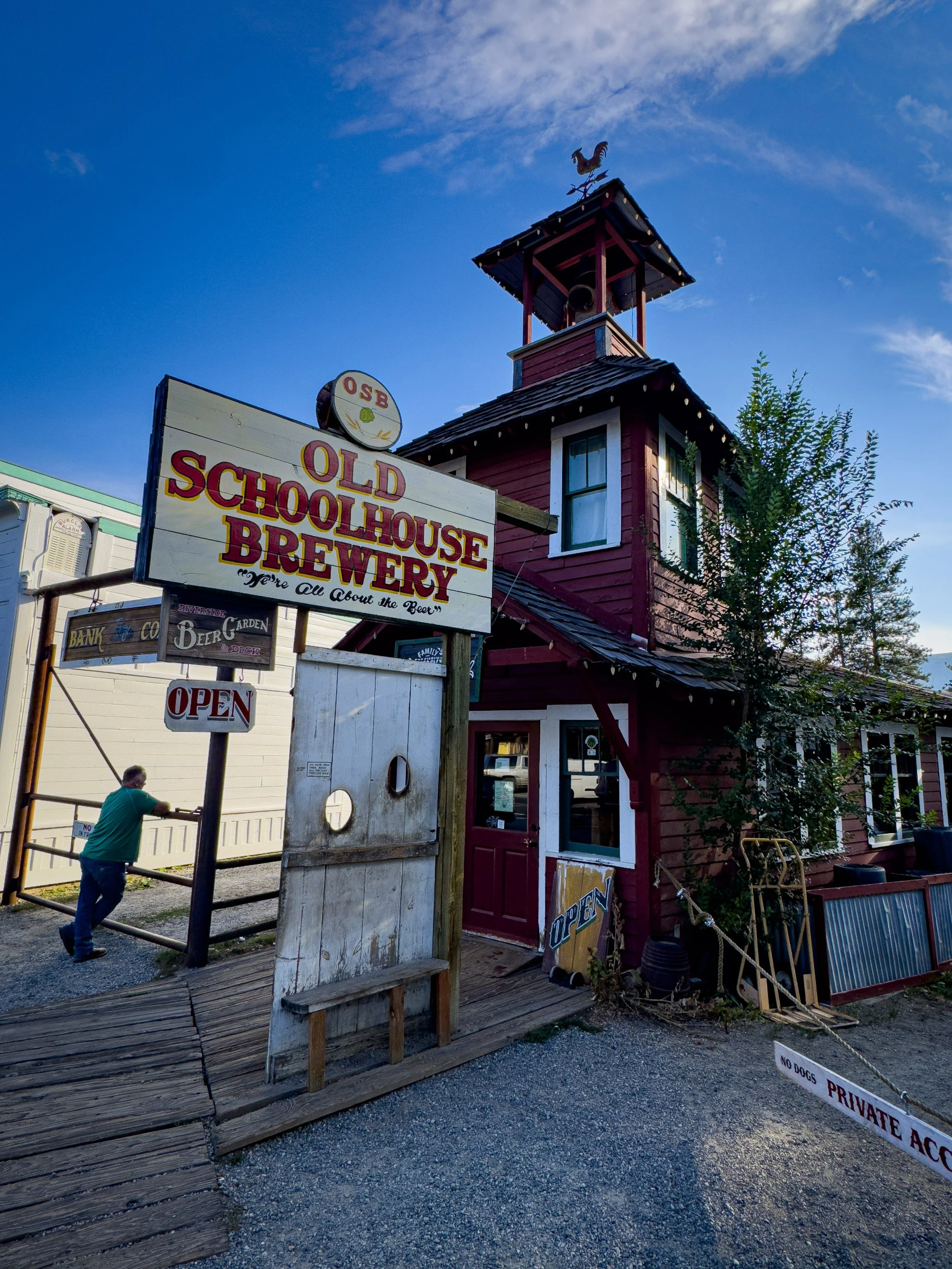
I stopped at a brewery for dinner and a pint before turning back toward camp. Winthrop didn’t excite me as much as I had expected, and dinner turned out to be a poor choice. Not every stop on a road trip becomes a favorite.
That meant driving the serpentine SR-20 again—this time in darkness.
I had done enough mountain driving by this stage of the trip that winding roads didn't bother me much anymore.
Still, North Cascades in the dark demanded attention.
The next morning I packed my tent and began moving toward Bellingham, again taking the scenic route.
I stopped in the little town of Concrete for fresh pastries and made a detour into the Mount Baker Recreation Area, where I wandered along Baker Lake under bright skies and crisp, almost fall-like air.
Then came Sedro-Woolley, known as the Gateway to the North Cascades.
I wandered through its streets and stepped into the local museum.
These little stops had become part of the rhythm of my road trip.
The national parks provided the spectacular landscapes, but small towns, local museums, coffee shops and conversations gave me glimpses of the communities in between.
I wasn't simply traveling from national park to national park.
I was traveling across America.
By evening I reached Bellingham and wandered through historic Fairhaven before dinner.
That's where I stumbled into the Peter James Photography Gallery.
I hadn't planned the visit. I simply walked in—and then had trouble leaving.
The walls were filled with enormous photographs of the Pacific Northwest: mountains, forests, coastlines and lakes displayed at a scale that made them feel almost like windows into the landscape.
I spent a long time talking with the woman looking after the gallery and staring at the photographs.
After days of driving and hiking through this part of the country, seeing someone capture its beauty that way hit me differently. I found myself thinking about cameras, photography and what it would be like to head into the wilderness with serious equipment and the sole purpose of waiting for that one extraordinary image.
For a while, I genuinely wanted to buy the kind of camera Peter James used and go on expeditions like his.
The encounter stayed with me. I started following Peter's work afterward, partly for the photographs themselves and partly because I was fascinated by the idea of someone continually heading into the wilderness with an enormous camera kit, waiting for the landscape to give him the image he was looking for.
Maybe that was unrealistic.
But that's one of the things travel does to me. Every once in a while, I encounter a place—or a person doing something remarkable in that place—that makes me imagine a completely different version of my own life.
I eventually left the gallery and continued wandering through Fairhaven.
North Cascades was behind me.
Olympic National Park was next.
Why North Cascades stayed with me
I spent much less time in North Cascades than I had in Glacier.
There was no eight-day collection of major hikes. No bear wandering 20 feet from me. No complicated boat schedules. No 14-mile endurance day.
Yet when I think back on the entire cross-country journey, North Cascades sits right alongside Glacier as one of its highlights.
Maybe part of the reason was its relative simplicity.
I drove.
I camped.
I hiked.
I got briefly lost.
A stranger helped me.
I stared at mountains.
I jumped into a freezing lake.
And then I kept driving west.
There was something about the landscape itself, too.
Glacier felt grand and expansive.
North Cascades felt rugged and compressed—as though someone had pushed enormous mountains together and threaded a narrow highway between them.
SR-20 wasn't merely the road connecting my hikes. It became part of the experience.
Sometimes the famous hike is the memory.
Sometimes it's the stranger who pulls you out of the mud, the shock of an icy alpine lake, or a tiny museum in a town you hadn't planned to visit.
Sometimes it's walking unexpectedly into a photography gallery and leaving with an entirely new idea in your head.
And sometimes it's simply a winding road through enormous mountains, the windows down and rock and roll playing, with nowhere you particularly need to be except farther west.
North Cascades gave me all of that.
EXPLORE MORE FROM NORTH CASCADES