Eight Days in Glacier: Big Hikes, Blue Lakes and a Borrowed Can of Bear Spray
A note about this journey: In the summer of 2025, I set out from New Jersey on a solo cross-country road trip toward California—camping, hiking and exploring national parks along the way. Glacier National Park was one unforgettable chapter in a journey that took me through the Dakotas, the Pacific Northwest and eventually the California redwoods. This is the first in a series of stories from that trip; I'll share more of the road, the parks and the unexpected moments along the way.
By the time I reached Glacier National Park, I had already been on the road for days—through the Dakotas, the Badlands, the Black Hills and Montana. I pulled into St. Mary on Glacier's east side late in the afternoon, stopped at the visitor center just before closing, and set up camp.
It was almost 7 p.m., but the August sun was still blazing.
Most sensible people would probably have called it a day.
Instead, I drove onto Going-to-the-Sun Road.
That decision set the tone for my eight days in Glacier.
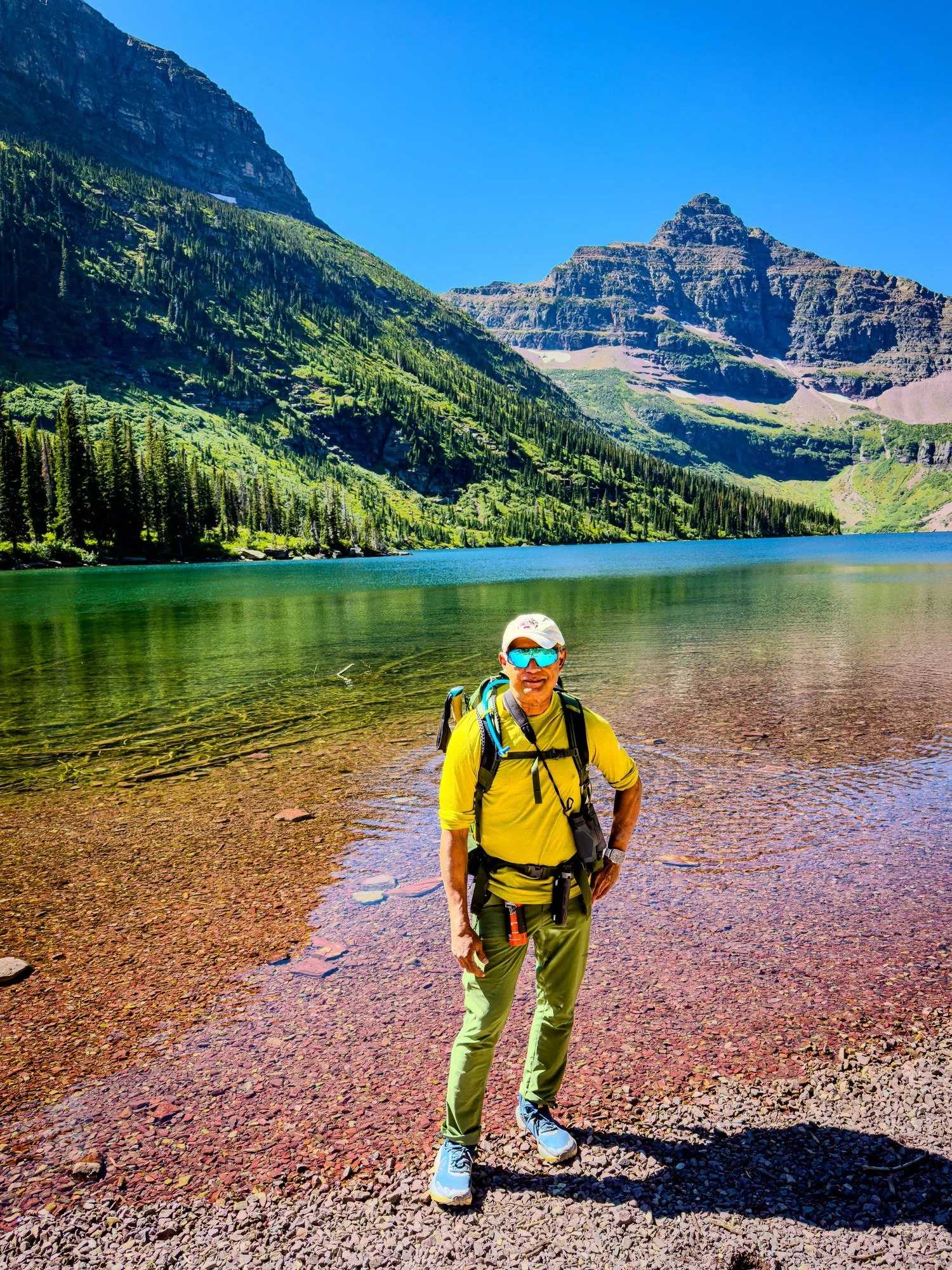
A borrowed can of bear spray
I reached Logan Pass with enough daylight for the three-mile hike to Hidden Lake Overlook. Before leaving, I had been trying to find somewhere to rent bear spray. Nobody rented it; everyone wanted about $60 to sell me a can.
While talking about this on the trail, an older gentleman who lived nearby did something unexpected. He simply handed me one of his.
He showed me how to use it and insisted that I shouldn't be hiking without it. He had others at home, he said. I should take this one.
That small act of generosity stayed with me.
As I climbed toward Hidden Lake, most hikers were coming the other way. Several warned me that a bear and two cubs had been spotted near the trail. Some had turned around. One photographer even let me look through his enormous zoom lens and showed me where the bears had moved away from the path.
I kept going.
When I finally reached the overlook, I was completely alone.
Below me, Hidden Lake shimmered in the fading light. The mountains glowed in twilight. The trail had gone silent.
It reminded me of the Swiss Alps, but comparisons seemed almost unnecessary. Glacier was already establishing its own personality.
By the time I got back, it was 10:30 p.m.
So much for an easy arrival day.
When Glacier turns up the wildlife
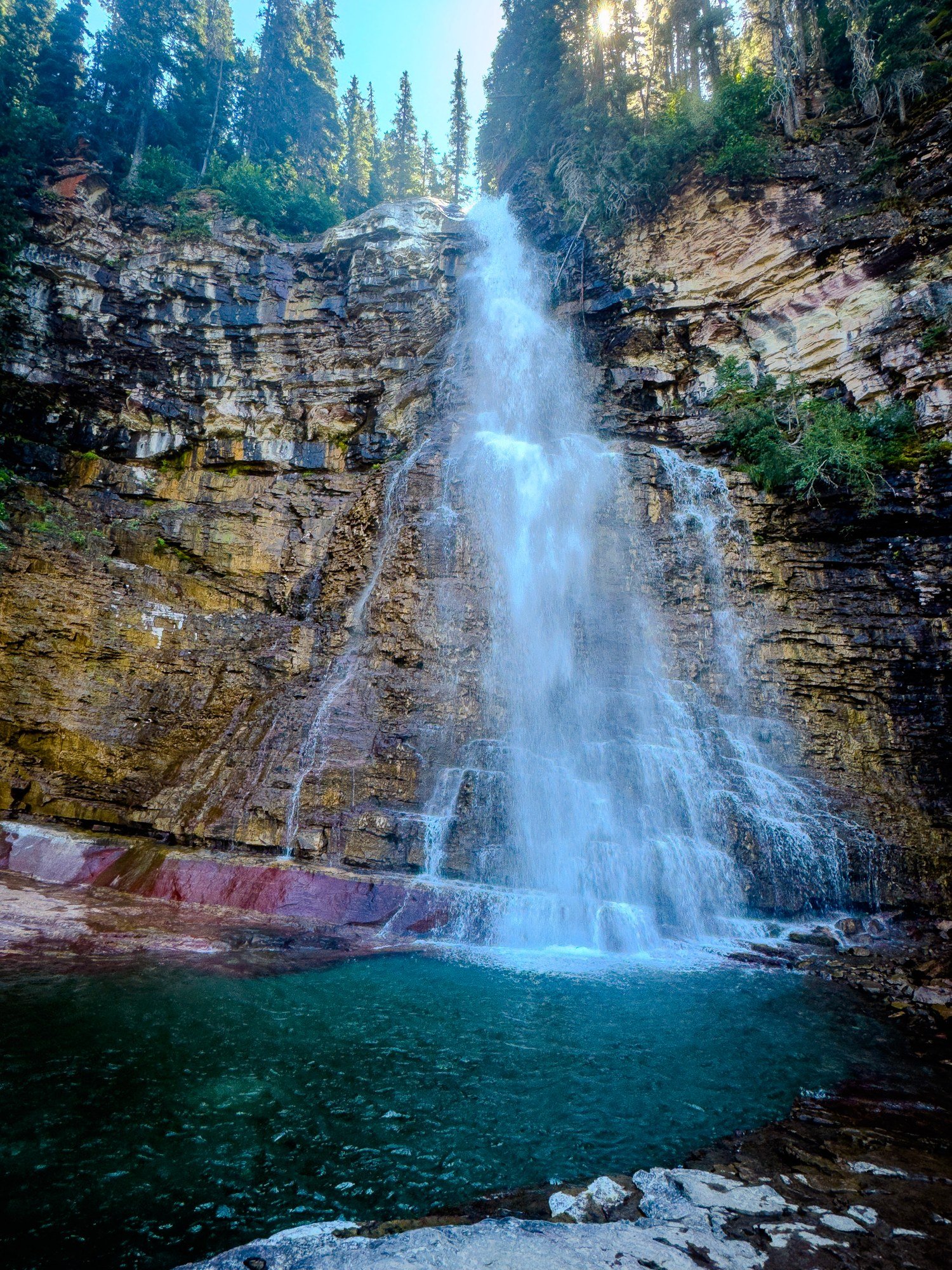
The next day I took a boat across St. Mary Lake. The scheduled return gave me enough time to hike only to St. Mary Falls, but Virginia Falls was farther up the trail and I wanted to see both.
So I skipped my assigned return boat and kept walking.
The full hike was about 5½ miles. St. Mary Lake was an extraordinary deep blue, and parts of the trail reminded me strangely of hiking the Cinque Terre in Italy—similar colors and terrain, except that the Mediterranean had been replaced by a glacial lake.
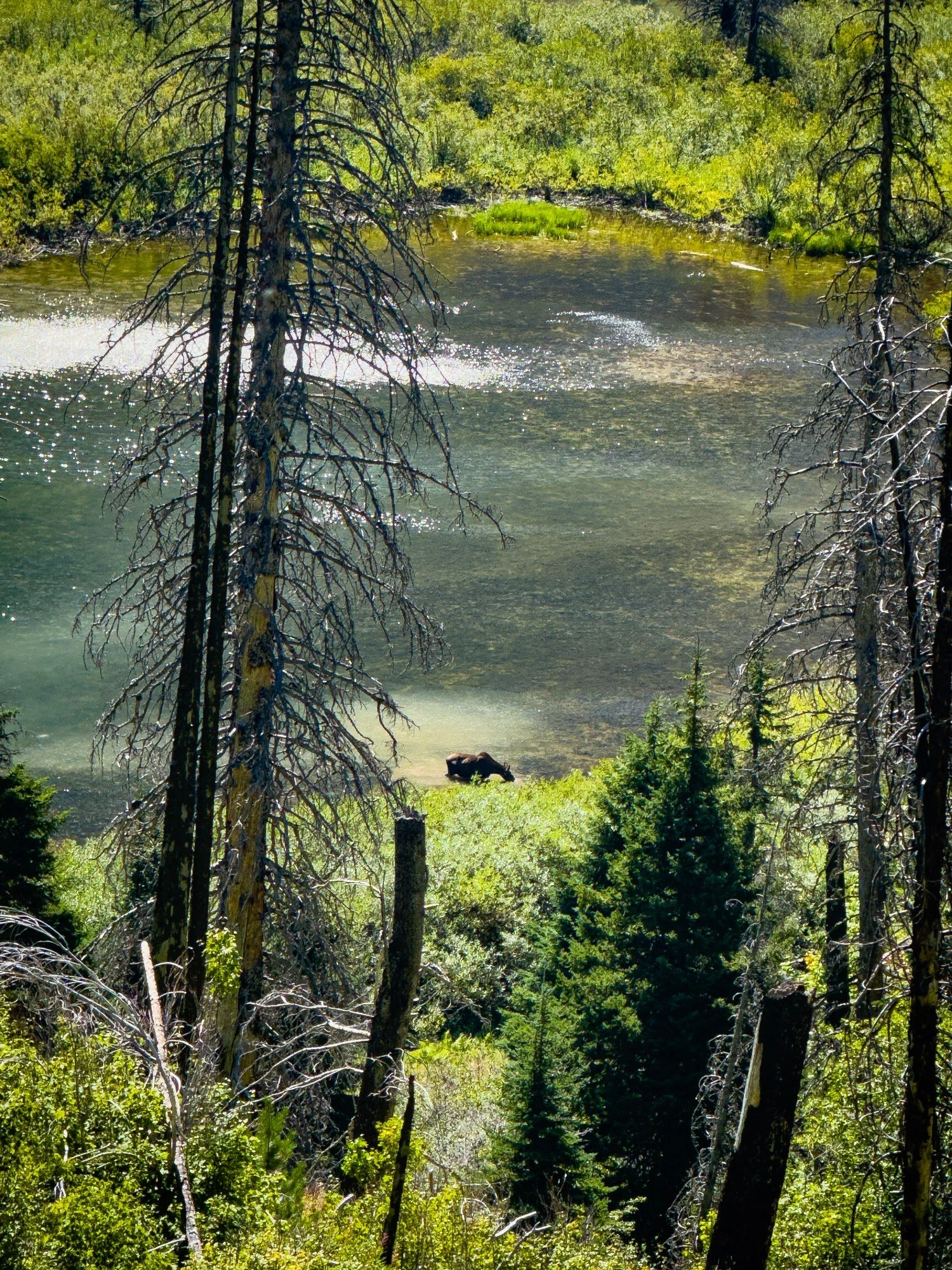
Then came the wildlife.
A moose and her calf were playing in the water. Earlier, two bighorn sheep had stood in front of my car for nearly ten minutes, apparently perfectly happy to stare down my headlights.
And while I waited at the dock hoping for space on a later boat, someone suddenly shouted:
“Bear!”
A huge bear appeared perhaps 20 feet away, prowling around with remarkable confidence. We made noise and slowly backed away. The bear didn't seem particularly impressed by any of us.
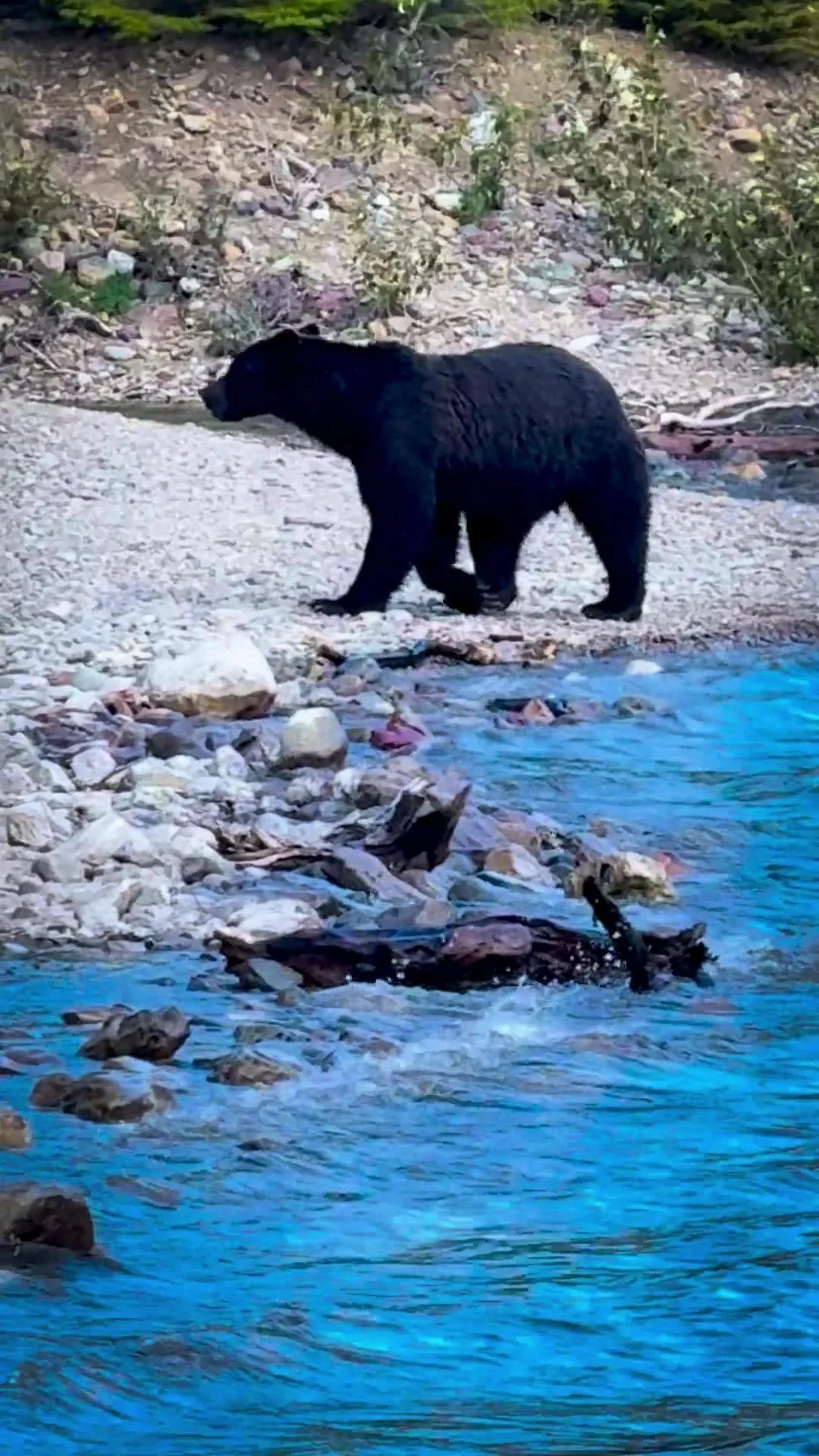
I had my borrowed bear spray.
Thankfully, it stayed in its holster.
Grinnell: earning those impossible blue lakes
Grinnell Glacier Trail was one of the hikes I had most wanted to do.
The logistics, however, were very Glacier.
I had managed to reserve a 1 p.m. boat weeks earlier, but that departure wouldn't leave enough time to complete the roughly eight-mile round trip before the last boat back. So I showed up when the ticket booth opened at 8 a.m. and put myself on the waitlist for an earlier departure.
I'd barely slept. Howling winds had battered my tent all night, and I spent hours wondering whether the rainfly or stakes would give up first. My REI tent survived better than I did.
Still groggy, I grabbed coffee at the historic Many Glacier Hotel and waited.
The gamble worked. I got onto the 9 a.m. boat.
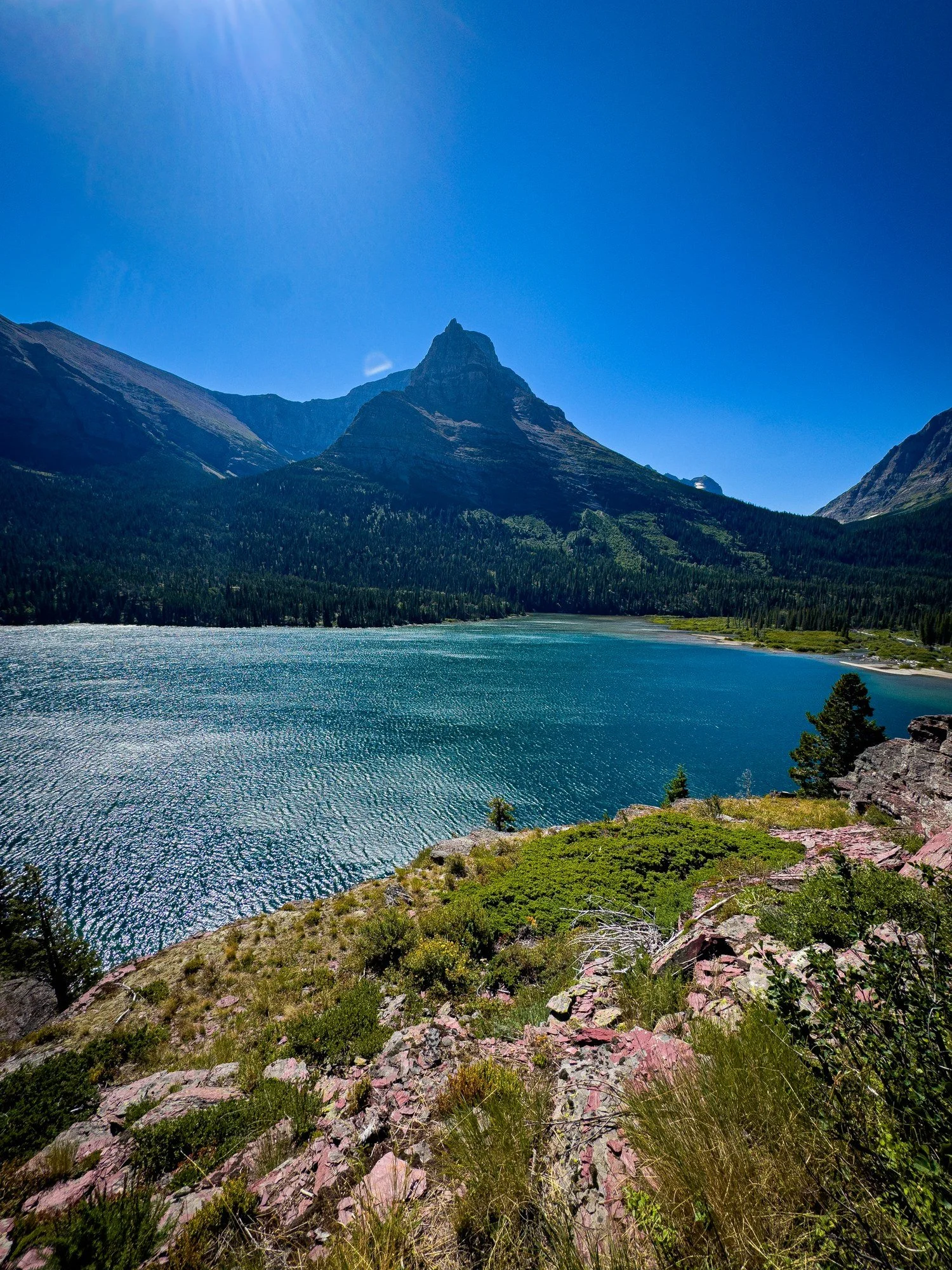
Grinnell lived up to its reputation: more than seven miles, roughly 2,000 feet of climbing and three brilliant lakes—Swiftcurrent, Josephine and Grinnell—appearing in different combinations as I gained elevation.
At one point, all three were visible below me, shimmering an almost unnatural blue.
The feeling reminded me of trekking toward Everest Base Camp: not because the landscapes were identical, but because of that same sensation of being very small inside something enormous.
At the top was Grinnell Glacier and the turquoise meltwater lake beneath it.
I should have celebrated with lunch.
Unfortunately, I'd carefully made almond butter sandwiches the previous evening—and carefully left them in the cooler at camp.
So my magnificent Glacier lunch consisted of an energy bar and nuts.
On the trail I'd met a woman from California whose husband had turned back. She asked if she could hike with me. With bears around, company made sense. We continued together and eventually reunited with her husband on the way down.
Then a bighorn sheep decided the trail belonged to him.
We waited.
He ate.
We waited some more.
Eventually he wandered off.
By the time I returned to the trailhead, I'd consumed more than four liters of water and very little food.
I corrected the calorie deficit immediately with a 12-inch pizza and a cold Stella Artois.
Not every day needs to hurt
After several hard hiking days, I headed south to Two Medicine.
The difference was immediate. It felt quieter and more remote than St. Mary and Many Glacier.
A boat carried me across Two Medicine Lake, and I hiked first toward Twin Falls and then continued to Upper Two Medicine Lake.
About five miles. Roughly 500 feet of elevation.
Nothing heroic.
And it was one of my favorite days.
The trail wandered through shady spruce and fir forest, then opened into meadows scattered with wildflowers. I spotted two moose quietly grazing beside the trail. Eventually the forest gave way to Upper Two Medicine Lake, surrounded by jagged mountains reflected in still water.
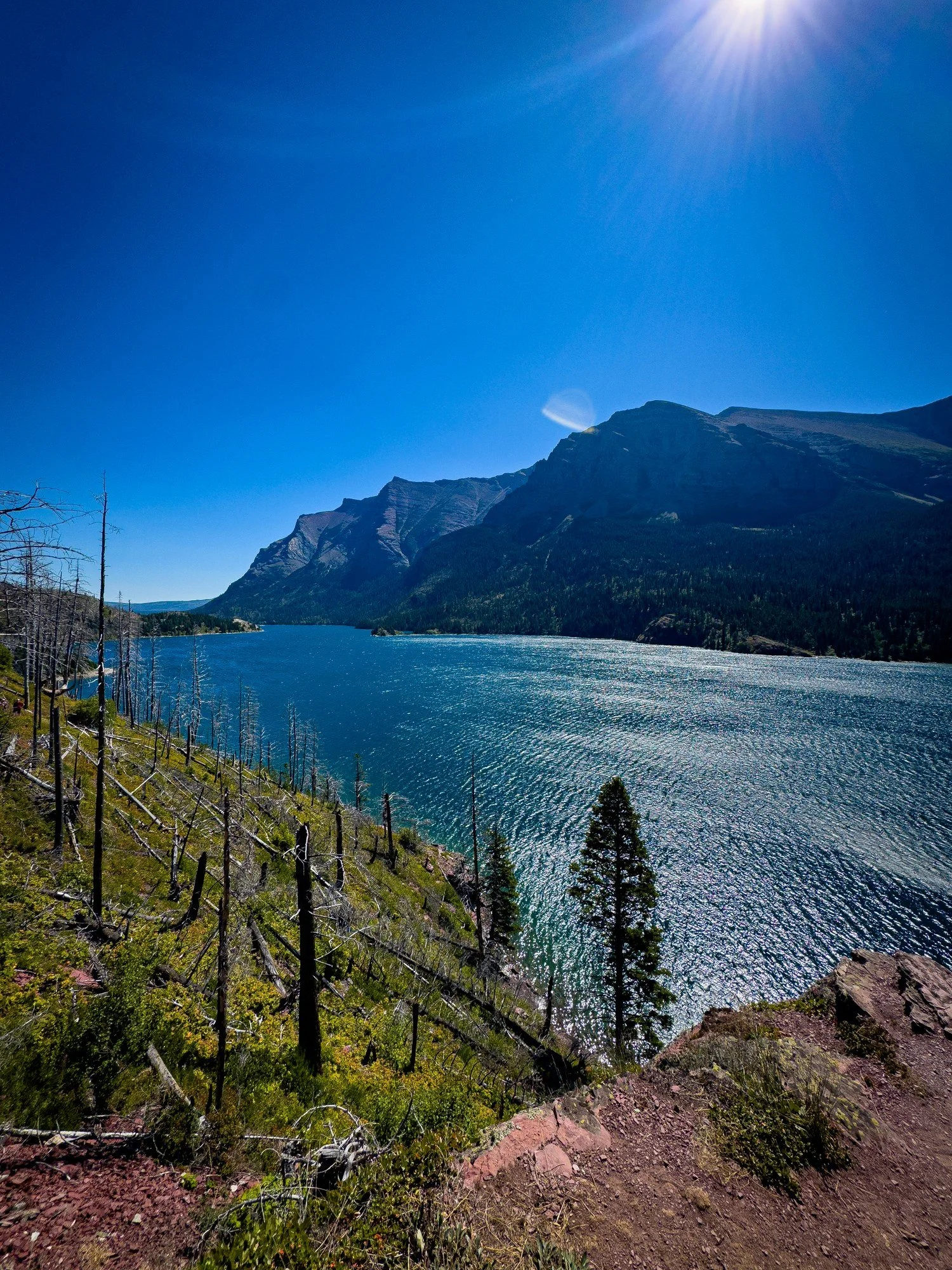
For once, I wasn't racing a boat schedule, grinding up 2,000 feet or wondering whether my knees would forgive me.
I was simply walking.
It was probably the most soul-refreshing hike I'd had in Glacier.
Long trips teach you this eventually: you can't make every day the biggest day. Sometimes the easier day is what lets you appreciate—and survive—the next hard one.
Crossing Glacier on Going-to-the-Sun Road
Eventually I moved camp from Glacier's east side to the west, following Going-to-the-Sun Road across the Continental Divide.
The road itself deserves to be treated as an experience rather than transportation.
I stopped constantly: Wild Goose Island, Sun Point, Baring Falls, Sunrift Gorge, Trail of the Cedars, Avalanche Lake.
What struck me most was how different the two sides of Glacier felt.
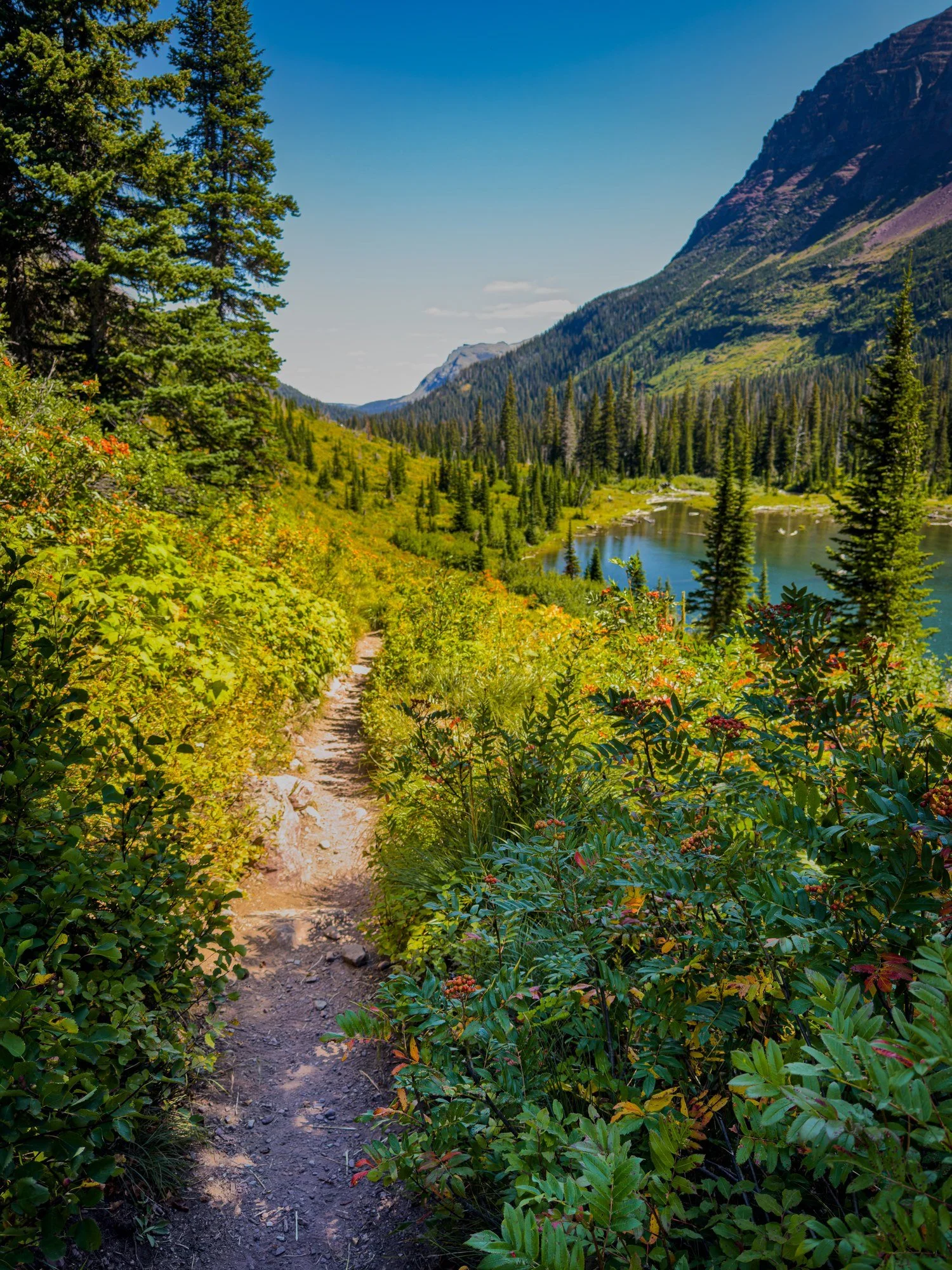
The east showed more scars of past fires—open slopes and exposed mountains. The west felt lush, dense and enclosed, more reminiscent of eastern forests.
Even the campgrounds reflected the difference. After several exposed campsites, my new spot on the west side was tucked into trees and shade.
By then, though, fatigue was accumulating.
I had been stacking hiking days on top of driving days on top of camping nights. One day at Lake McDonald, I deliberately did very little. I wandered around Apgar, ate a proper lunch at Lake McDonald Lodge and took a scenic boat ride.
I even considered swimming or renting a kayak.
Then I stopped myself.
The whole point of the day was to rest.
That turned out to be important, because Highline was waiting.
Highline: a good day and a bad day
My alarm went off at 4 a.m.
Sandwiches: packed.
Water bladder: packed.
Electrolytes: packed.
Cold-brew coffee: absolutely packed.
I drove Going-to-the-Sun Road in darkness toward Logan Pass. In some ways, driving those winding mountain roads before sunrise was easier—I couldn't see the sheer drop-offs.
Parking was already filling when I arrived.
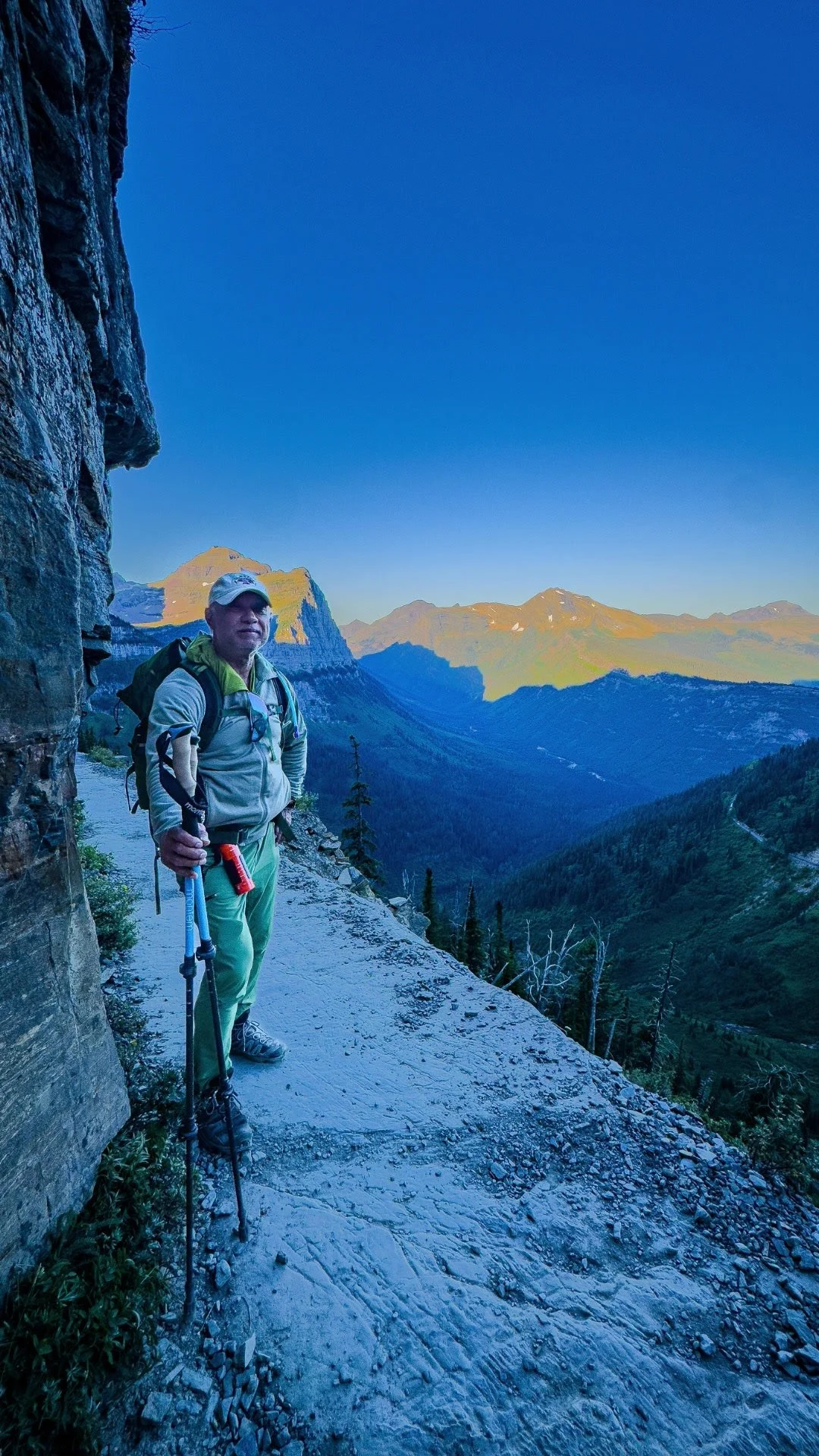
The Highline Trail begins dramatically, clinging to mountainsides above the road. For the first six miles, though, I felt good. The elevation gain was relatively modest, the wildflowers beautiful, and the views across the Continental Divide seemingly endless.
Then I reached the spur to the Grinnell Glacier Overlook.
It was only about 0.8 miles.
How bad could 0.8 miles be?
Very bad.
The trail climbs roughly 1,100 feet in that short distance. It felt almost vertical—steep, narrow, slippery in places and relentless.
Along the way I fell into step with a few other hikers: Mike from Kansas; Linda and her daughter from Philadelphia; briefly Sasha and Kathy from Connecticut. People stopped, caught their breath and started again.
Eventually we reached the top.
The view justified almost everything. Grinnell Glacier sat in the distance, with Grinnell Lake far below. Having already hiked to the glacier itself, seeing the whole landscape from above gave me an entirely different perspective.
I pulled out my sandwich.
A squirrel the size of a small cat stole half of it directly from my hand.
Then another squirrel got into my bag and stole the rest.
Lunch: gone.
Again.
Apparently Glacier had decided I didn't need sandwiches.
The descent from the overlook was exactly as unpleasant as I had feared. Back on Highline, I continued to Granite Park Chalet, rested, refilled my water and then joined Mike for the four-mile descent along The Loop.
Four miles of steep downhill switchbacks.
In full sun.
My knees were not amused.
By the time I reached the shuttle stop, I'd covered about 14 miles with roughly 2,200 feet of elevation gain.
Somewhere along the way, I realized my bear spray was gone. It must have fallen from my belt.
A stranger had given it to me for free on my first evening in Glacier.
Eight days later, Glacier took it back.
Easy come, easy go.
What Glacier taught me
When I arrived at Glacier, I thought mostly in terms of trails: Which hikes were iconic? Which ones could I fit in? Where could I park? What boat did I need?
By the time I left, the memories that stayed with me weren't only the famous trails.
They were the stranger who handed me bear spray.
The woman who asked to hike together.
The bighorn sheep that refused to surrender the trail.
A moose and calf in the water.
Standing alone above Hidden Lake at twilight.
Forgetting lunch at Grinnell.
Having lunch stolen on Highline.
And recognizing, finally, that an easy five-mile walk could be every bit as rewarding as a 14-mile test of endurance.
Glacier is spectacular, but it also requires flexibility. Boat schedules change what you can hike. Parking can dictate when your day begins. Weather matters. Wildlife matters. Your body matters.
I went into the park wanting to do as much as possible.
I left appreciating something slightly different:
Do the big hike when the day is right for it.
Take the easier trail when it isn't.
And every once in a while, ignore the sensible decision to call it a day and hike toward a lake at sunset.
You never know who might hand you a can of bear spray along the way.
EXPLORE MORE FROM GLACIER
See more photographs from Glacier National Park →
Hidden Lake Trail — watch the reel →